

Mobile Service — We Come To You
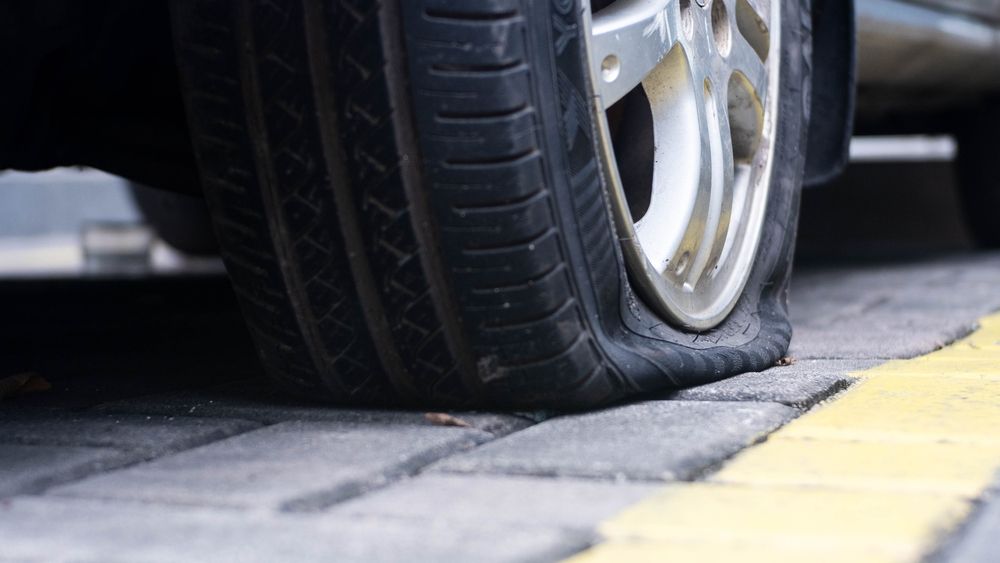
A bubble in your tire sidewall means the inner liner has broken and air is escaping into the sidewall itself. It cannot be repaired, and the tire needs replacing. If you have spotted one on a Loop 101 commute or in your driveway in Gilbert, the safe move is to stop driving on that tire now.
Key Takeaways
- A sidewall bubble is structural damage, not cosmetic. The tire's internal air seal has failed and pressurised air is pushing into the outer rubber.
- It cannot be patched or plugged. Industry repair standards restrict repairs to the tread area only — never the sidewall or shoulder.
- Most bubbles come from a single impact: a pothole, a hard curb strike, or freeway debris. The bubble often appears days or weeks after the hit.
- Underinflation makes impact damage far more likely, and Phoenix heat swings tire pressure hard between a 5am and a 4pm reading.
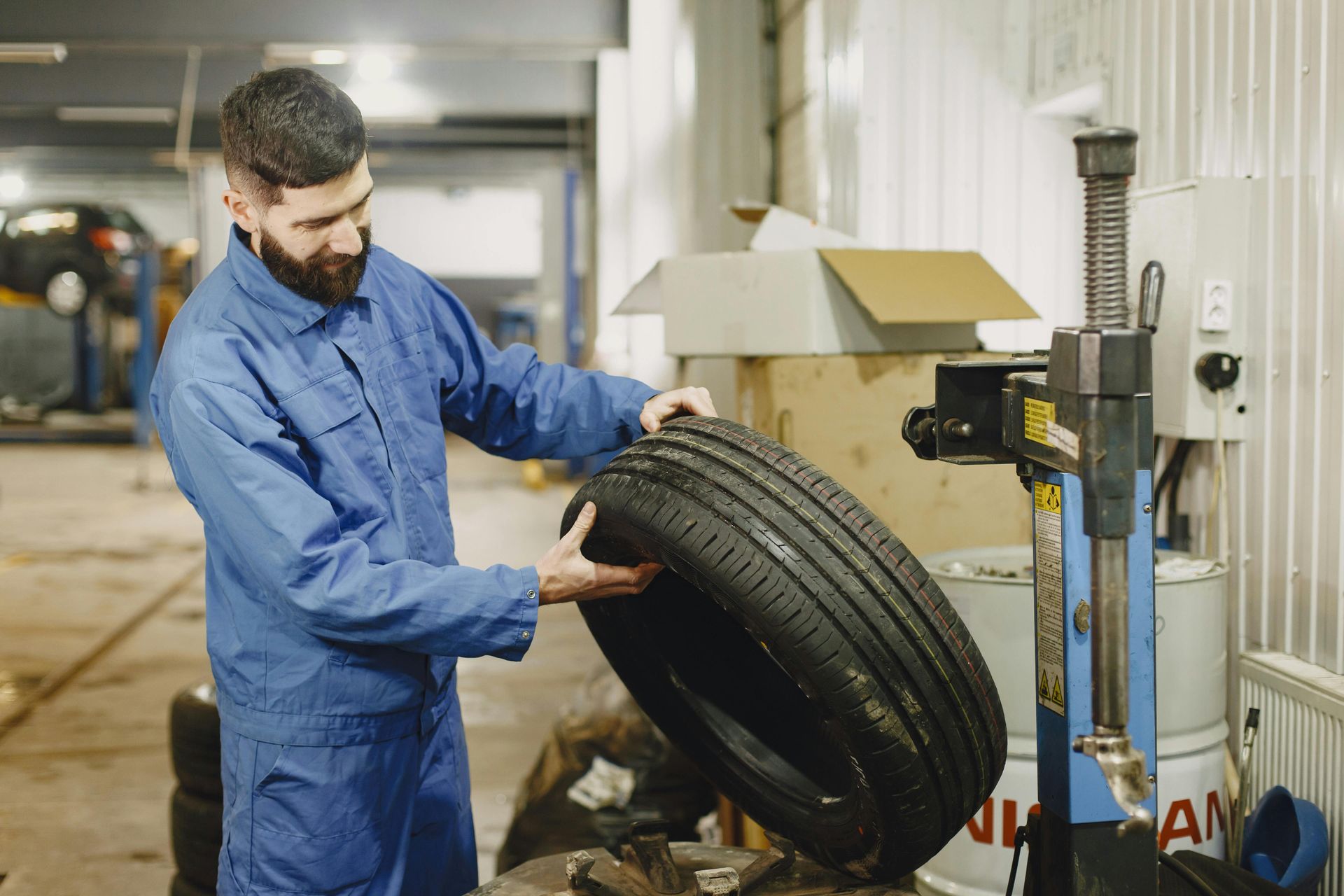
- Replacement is the only fix. We can bring the tire to your driveway, office or roadside and fit it there — see mobile tire installation.
What a Bubble in Your Tire Sidewall Actually Is
A sidewall bubble is a pocket of pressurised air trapped between the layers of the tire. Modern passenger tires have an airtight inner liner bonded to the inside of the casing. When that liner tears, air passes through it and collects under the outer sidewall rubber, pushing it outward into a visible bulge.
The bulge is the symptom. The failure is the broken liner and the snapped body cords underneath it — the cords that give the sidewall its strength. Those cords do not heal, and there is no way to reach them from outside the tire.
Sidewalls flex thousands of times a minute at freeway speed. A sidewall with severed cords is flexing on a weak spot, and heat builds fastest exactly where the structure has already failed. That is why a bubble that looked stable on the school run can let go on the way to Sky Harbor.
Can a Sidewall Bubble Be Repaired?
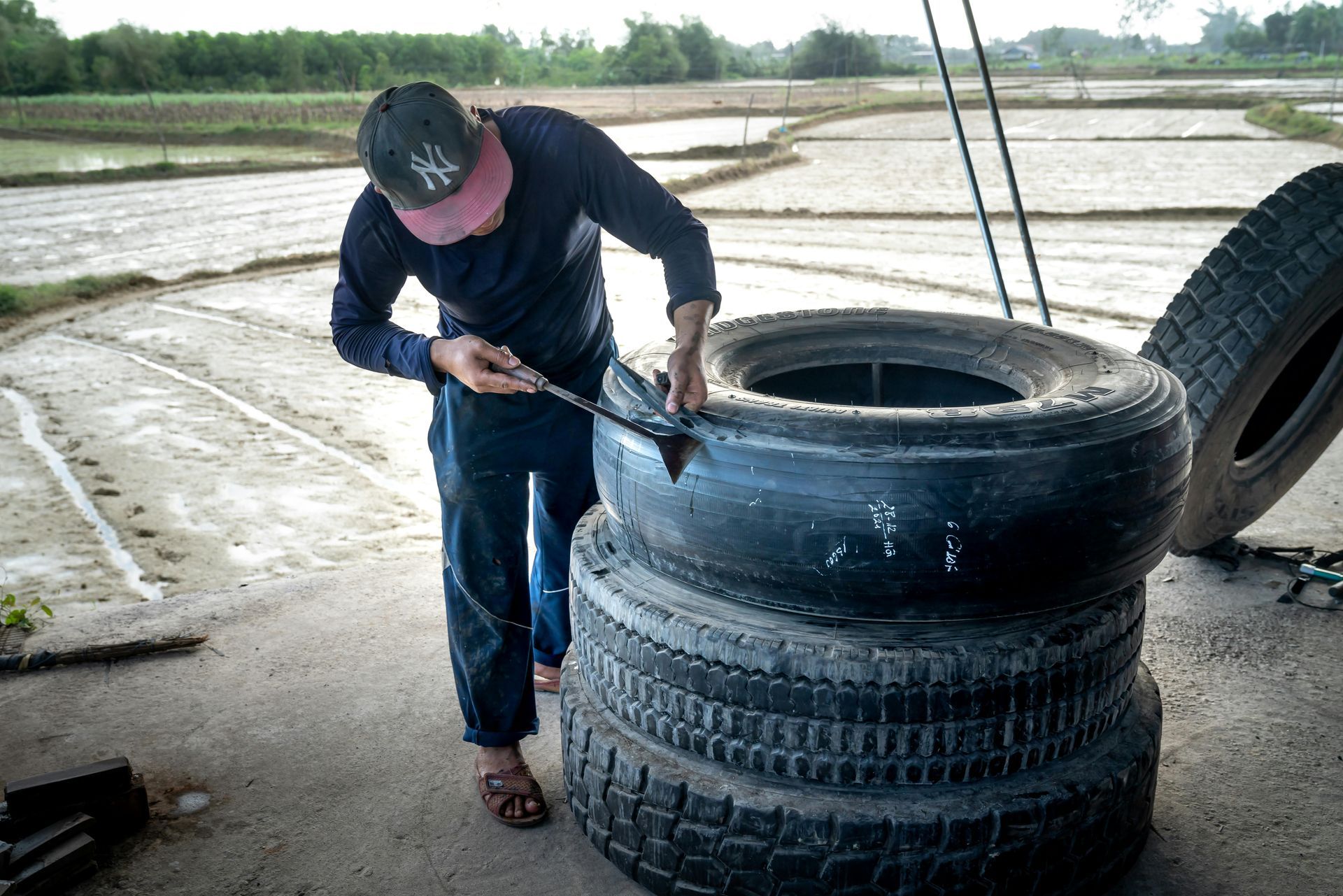
No. A sidewall bubble cannot be repaired, and no reputable tire shop will attempt it. Repair standards published by the U.S. Tire Manufacturers Association limit repairs to punctures within the tread area, and require the tire to be removed from the wheel and repaired from the inside with a combination plug-patch. Sidewall damage falls outside that boundary entirely.
People sometimes ask whether a bubble can be plugged the way a nail hole can. It cannot — a plug seals a small hole through the tread; it does nothing for broken structural cords. The same rule is why a nail close to the shoulder often has to be turned down as well. We covered that boundary in detail in how close to the sidewall a tire can be patched.
| Damage | Repairable? | Why |
|---|---|---|
| Nail or screw in the tread, under 1/4 inch | Yes | Sits inside the repairable tread area and can be plug-patched from the inside |
| Puncture in the shoulder | No | Outside the repairable area — the casing flexes too much at that point |
| Sidewall bubble or bulge | No | Inner liner is torn and body cords are broken; nothing can be restored from outside |
| Sidewall cut or gouge | No | Structural rubber and cords are compromised |
| Cracking from dry rot | No | Rubber has aged and hardened throughout — see dry rot tires in Arizona |
| Run-flat with a tread puncture | Sometimes | Depends on the manufacturer and whether the tire has been run while flat |
What Causes Sidewall Bubbles on Phoenix Roads
Almost every sidewall bubble starts with one impact hard enough to pinch the sidewall between an obstacle and the wheel rim. The tire usually holds air afterwards, which is why the damage goes unnoticed until the bulge appears days or weeks later.
The common causes here are specific to how and where we drive:
- Potholes and expansion joints on I-10, I-17, US-60 and the 101/202/303 loops, particularly after monsoon storms break up already-stressed pavement.
- Construction debris — the Valley runs near-continuous freeway widening work, and a dropped chunk of concrete or a steel offcut hits like a curb at 65mph.
- Curb strikes in tight parking structures and gated communities, especially on low-profile tires with very little sidewall to absorb the blow.
- Underinflation. A soft tire lets the rim reach the obstacle, and pinch damage follows. NHTSA's tire safety guidance is to check pressures monthly, when the tires are cold.
Heat compounds all of it. Air pressure rises and falls with temperature, so a tire set correctly during a 110°F afternoon can be meaningfully underinflated at 5am — and that is exactly when many people hit the freeway. During the National Weather Service's excessive heat warnings for the Phoenix area, the daily swing is at its widest. The same heat cycle drives the failures covered in why tires blow out in Arizona heat.
How Long Can You Drive on a Tire With a Bubble?
You should not drive on it at all. There is no safe mileage figure for a tire with a sidewall bubble, because the failure is structural and gives almost no warning before it lets go. A sidewall blowout at speed pulls the vehicle hard toward the failed corner.
If you find a bubble, here is the order to work in:
- Stop driving on it. If you are already on the freeway, signal early, move right and get well clear of the travel lanes.
- Do not reduce or add pressure. Neither helps, and letting air out makes the sidewall flex more.
- Fit the spare if you have one and it is roadworthy — check its pressure and its DOT date code before trusting it.
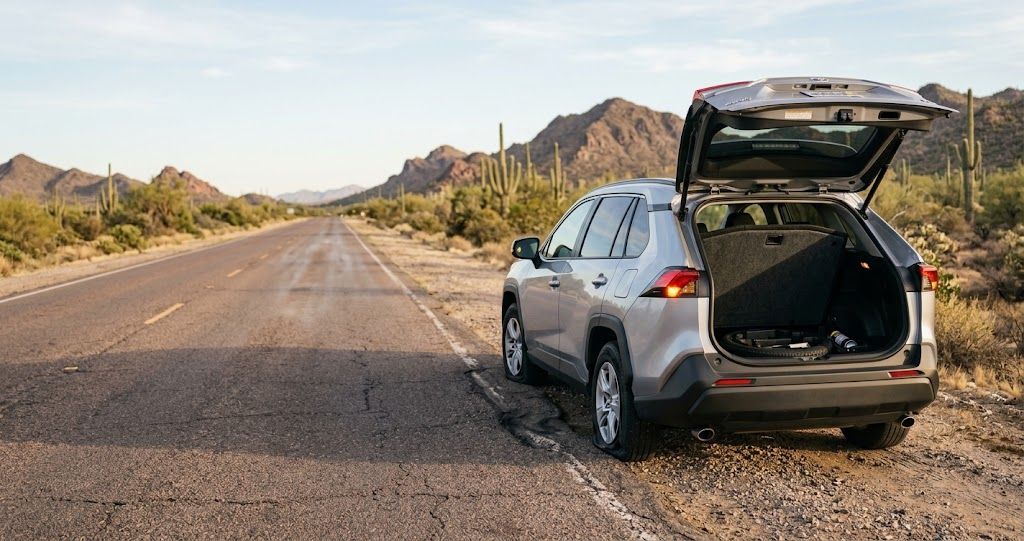
- If there is no spare, do not drive to a shop. Call or text us and we will bring the replacement tire to the vehicle.
A bubble on one tire is not automatically a sign the others are damaged, but the impact that caused it may have hit more than one wheel. It is worth having all four looked at, along with the wheel itself — a hard enough strike can bend a rim, and a bent rim will keep destroying tires until it is dealt with.
How to Reduce the Risk
You cannot avoid every pothole on a Valley commute, but the odds shift a long way with pressure discipline. Checking pressures monthly when tires are cold, and again before any long summer drive, is the single highest-value habit for Arizona drivers.
A TPMS light is a warning system, not a maintenance schedule — most systems only alert once a tire is roughly 25% below its placard pressure, which is well into the range where impact damage becomes likely. Check with a gauge rather than waiting for the dash light.
Sidewall condition is also worth a look whenever you wash the car. Run a hand around the inner and outer sidewall of each tire. Bulges, cuts and cracking are all easier to catch early than to deal with at the roadside.
Frequently Asked Questions
Is a bubble in my tire an emergency?
Treat it as one. The tire can fail without further warning, so it should come off the vehicle before the next drive. If the car is parked safely at home or at work, you have time to arrange a replacement rather than rushing anywhere on the damaged tire.
Will my tire warranty cover a sidewall bubble?
Sometimes. Road hazard coverage, where it exists, is the part of a warranty that deals with impact damage — manufacturer defect warranties usually do not. Terms vary by brand and by where the tire was bought, so check the paperwork that came with the tires.
Do I have to replace tires in pairs?
Often, yes. If the remaining tire on that axle still has close to full tread, a single replacement is usually fine. If it is significantly worn, replacing both keeps the axle balanced — and on all-wheel-drive vehicles, manufacturers frequently specify a tighter tread-depth tolerance across all four.
Can you replace a tire at my home or office?
Yes. We are a fully mobile tire service with no storefront — we come to your home, office, job site or the roadside. We carry touchless tire machines that never contact the wheel face, and we balance on site before we leave.
What if the bubble is on a custom or low-profile wheel?
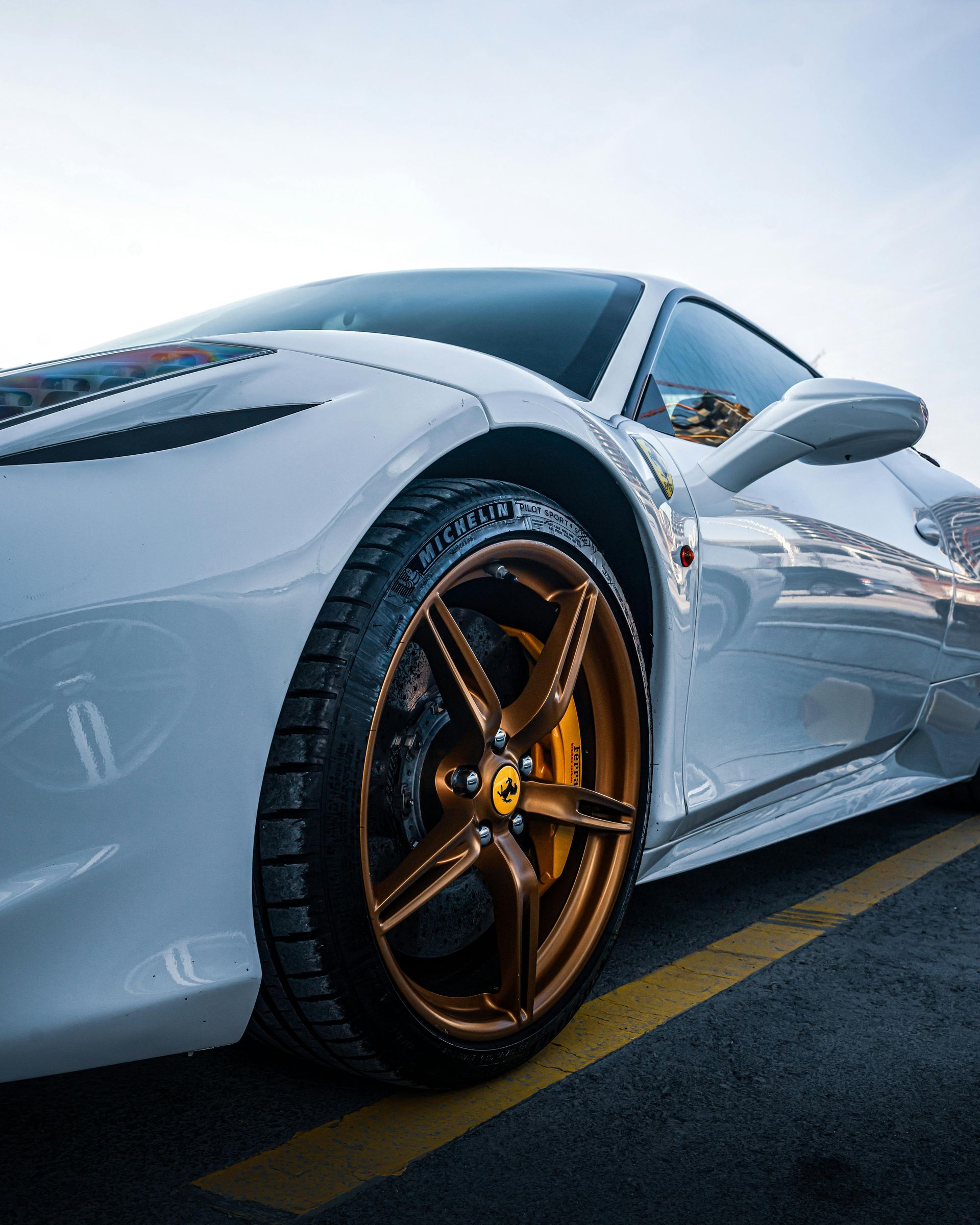
That is routine work for us. Touchless mounting is specifically designed for delicate and expensive wheel finishes, and we handle low-profile fitments, staggered setups and center-lock wheels. Everything we fit is backed by our 45-day ride guarantee.
Found a Bubble? Don't Drive On It.
We bring the tire to you — driveway, office, job site or roadside — anywhere across the Phoenix metro. Touchless mounting, balanced on site, backed by a 45-day ride guarantee.
Call or Text (602) 492-8495 Book OnlineLast updated August 19, 2026 · Written by Nathan Martin, Founder of LugWrench Heroes Mobile Tire Shop · Browse tires we carry or read about tire damage that cannot be repaired.