

By Nathan Martin, Founder — LugWrench Heroes Mobile Tire Shop · 20+ years in the tire industry · Mobile tire service across the Phoenix metro since 2020
A compact spare tire is built for about 50 to 70 miles at no more than 50 mph. In Phoenix, that limit collides with 65-mph freeways and pavement that passes 150°F by early afternoon — which is why the safest answer to “how long can I drive on a spare tire” here is usually “only as far as your driveway.”
This guide covers the real distance and speed limits for every kind of spare, what those limits mean on Loop 101, I-10 and US-60, how summer heat shortens them, and how a mobile tire installation lets you skip the donut drive altogether.
Key Takeaways
- Compact “donut” spare: 50 mph maximum, roughly 50–70 miles total. The exact limit is printed on the spare’s sidewall.
- Full-size matching spare: no distance limit, but check its age and pressure — it has probably been sitting for years.
- Phoenix problem: every metro freeway is posted above the donut’s 50-mph ceiling, and hot pavement makes an underinflated spare fail sooner.
- No spare at all: Tesla, Rivian and Cybertruck ship without one — see what to do with a flat and no spare in Phoenix.
- The shortcut: mobile tire installation brings the new tire to you, so the donut never has to touch a freeway.
How Far Can You Drive on a Spare Tire?
Most compact spare tires are rated for a maximum of 50 mph and about 50 to 70 miles of total use. A full-size spare that matches your other tires has no distance limit, and a full-size “temporary” spare with a yellow warning label still carries a 50-mph cap. Run-flat tires give you about 50 miles at 50 mph after a puncture. Your owner’s manual and the label on the spare itself override any general rule.
The distance limit exists because a compact spare is a different tire, not a smaller version of your regular one. It has shallower tread, a narrower footprint, fewer internal belts and a thinner sidewall, and it runs at a much higher inflation pressure — usually around 60 psi. Owner’s manuals put its usable tread life at less than 3,000 miles, which is why a donut that has already been used once should be treated as suspect the second time.
| Spare type | Max speed | Max distance | Common on |
|---|---|---|---|
| Compact / “donut” spare | 50 mph | About 50–70 miles | Most sedans, crossovers and small SUVs |
| Full-size matching spare | Normal | No limit (check age and pressure) | Trucks, body-on-frame SUVs, some older cars |
| Full-size temporary spare (yellow label) | 50 mph | Short-term only | Some SUVs and minivans |
| Run-flat tire | 50 mph | About 50 miles after a puncture | BMW, Mini, many luxury models |
| Inflator kit, no spare | Depends on damage | Small tread punctures only | Tesla, Rivian, Cybertruck, many hybrids |
Why 50 mph Is a Problem on Phoenix Freeways
Every freeway in the Phoenix metro is posted above a compact spare’s 50-mph limit, so driving a donut on Loop 101, Loop 202, I-10 or US-60 means either holding up the right lane at 50 or exceeding the tire’s rating. Neither is a good option. Below the rating you become a rolling obstacle in traffic that averages 70 mph; above it, the spare builds heat it was never designed to shed.
| Freeway | Typical posted limit | Gap vs. donut limit |
|---|---|---|
| Loop 101 (Scottsdale, Tempe, Chandler, Glendale) | 65 mph | 15 mph over |
| Loop 202 (Tempe, Mesa, Gilbert, South Mountain) | 65 mph | 15 mph over |
| I-10 through central Phoenix | 65 mph | 15 mph over |
| US-60 Superstition (Mesa, Apache Junction) | 65 mph | 15 mph over |
| I-10 and I-17 outside the metro | 75 mph | 25 mph over |
If you have no choice but to use a freeway, stay in the far right lane, turn on your hazard lights only when you are moving well below the flow of traffic, and get off at the first exit that puts you on surface streets. Surface streets like Scottsdale Road, Baseline Road or Bell Road are posted at 40–45 mph and are the safer path for a donut. For live closures and construction on your route, check ADOT’s az511 before you roll.
Where 50 Miles Actually Gets You From the Valley
Fifty miles sounds like plenty until you map it across a metro that is nearly 70 miles wide. From our Tempe base near Ash Avenue, 50 miles reaches most of the Valley but none of the destinations people most often try to limp to on a spare.
| Destination | Approx. distance from Tempe | On a donut? |
|---|---|---|
| Sky Harbor Airport | 5 miles | Yes, at surface-street speeds |
| Old Town Scottsdale | 11 miles | Yes |
| Goodyear / Litchfield Park | 25 miles | Yes, but that is half your budget one way |
| Queen Creek / Gold Canyon | 25–35 miles | One way only |
| Cave Creek | 35 miles | One way only |
| Casa Grande | 45 miles | Barely, and only on I-10 at 75 mph |
| Tucson | About 110 miles | No |
| Sedona or Flagstaff | 120–145 miles | No — and you would climb 5,000 feet doing it |
The practical rule: a donut is for getting home or to a safe parking lot, not for finishing a trip. Round trips count double, and the miles you already drove on the spare last year still count against it.
Phoenix Heat Changes the Math
Summer heat shortens every spare-tire limit because heat is what kills a compact spare. Phoenix asphalt regularly exceeds 150°F from May through September, and a thin-sidewall donut inflated to 60 psi and spinning faster than your other tires (because it is smaller) has almost no margin for extra heat. Three things make it worse:
- Low pressure. Spares lose pressure sitting in a trunk that reaches 130–140°F every afternoon. Most donuts we see in the field are well under their 60-psi rating before they ever go on the car. Check it with a gauge before you drive, not after.
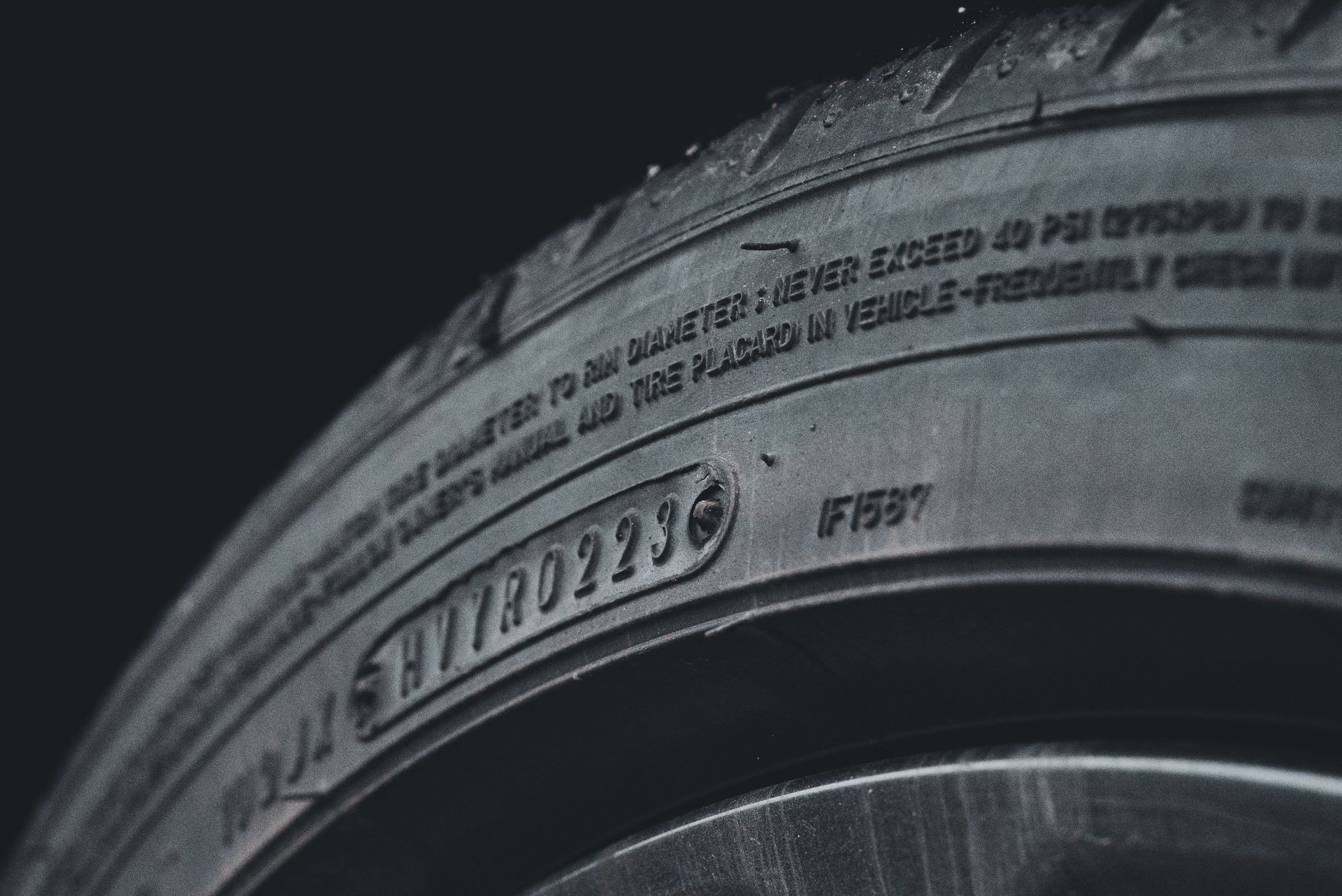
- Age. Tires degrade even when they are never used. Many Valley cars are carrying a spare that is 8, 10 or 12 years old, baked by a decade of summers. Read the four-digit DOT date code on the sidewall — “2314” means the 23rd week of 2014 — and treat anything past six years the way you would treat dry-rotted tires in Arizona: not freeway-safe.
- Snowbird sitting. A car that sat from May to October has a spare that sat with it. If the main tires need a look before the first long drive (see how long a car can sit before the tires go bad), so does the spare.
In monsoon season the opposite problem shows up: a narrow donut with shallow tread hydroplanes sooner than a full tire on the first slick rain of the year. Slow down further, and leave more braking distance than feels necessary.
Which Wheel Should the Spare Go On?
Put a compact spare on a non-driven wheel whenever possible. On a front-wheel-drive car with a front flat, move a full-size rear tire to the front and put the donut on the rear; owner’s manuals warn that a donut on a driving wheel hurts handling and traction. On all-wheel-drive vehicles the smaller diameter of a donut forces that wheel to spin faster than the other three, and long drives can strain the differential or AWD coupling. Keep AWD spare use to the shortest distance you can and get the matching tire back on quickly.
Also check whether the flat can be repaired before assuming you need a new tire. A puncture in the tread area under about a quarter inch is usually a proper plug-patch repair from the inside; sidewall and shoulder damage is not. Our mobile tire repair service handles that at your location, and if you have a run-flat, here is when a run-flat can be fixed.
Skip the Donut Drive: Get the Tire Installed Where the Car Sits
The safest number of freeway miles on a spare is zero, and mobile installation makes that possible. Instead of nursing a donut to a shop, waiting, and then driving back, we bring the replacement tire to your home, office or job site anywhere from Goodyear to Queen Creek and mount it with a touchless tire machine that never contacts the wheel face, balance it in the van, torque the lugs to spec and reset your TPMS. The donut goes back in the trunk, or better, gets checked and replaced while we are there.
| Drive to a shop on the donut | Mobile installation | |
|---|---|---|
| Freeway miles on the spare | Usually 10–30, plus the return trip | Zero |
| Exposure to 65–75 mph traffic at 50 mph | Yes | None |
| Your time | Drive, wait, drive back | Keep working; we come to the car |
| Wheel protection | Varies by shop equipment | Touchless mounting, safe for custom and delicate finishes |
| Spare checked and re-stowed | Rarely | Pressure and date code checked while we are there |
| Guarantee | Varies | 45-day ride guarantee |
Need tires first? Shop tires with mobile install across Michelin, Bridgestone, Continental, Toyo, Cooper, Nitto, Hercules and Uniroyal, and if you drive a Tesla with no spare at all, start with what to do about a flat tire on a Tesla.
Spare Tire FAQ
Can I drive on a spare tire for 2 days? What about 4 days?
Time matters less than miles and speed. A compact spare is fine in the driveway for a week; it is not fine for two days of 65-mph commuting on Loop 101. If your two or four days involve only short surface-street trips that total well under 50 miles, you are inside the rating. If they involve any freeway commute, get the real tire installed first — in Phoenix, mobile installation can happen at your office during those two days.
What happens if I drive 100 miles on a spare tire?
You are 30 to 50 miles past the rating, and the risks stack: tread wear on a tire with very little tread to begin with, heat buildup in the sidewall, worse braking and handling, and on AWD vehicles extra strain on the drivetrain from the mismatched diameter. Many people get away with it. The ones who do not usually have a second flat, on the spare, in a worse place than the first one.
Can you drive 300 miles on a spare tire?
Not on a compact spare. Three hundred miles is four to six times its rated distance and roughly the round trip from Phoenix to Flagstaff or Tucson. A full-size matching spare in good condition can do 300 miles at normal speeds, which is the reason trucks and larger SUVs still carry one. Check its pressure and DOT date before you count on it.
Can I drive on a spare tire on the highway in Phoenix?
Only if you can hold 50 mph or less, which on Valley freeways means the far right lane with traffic passing you 15 to 25 mph faster. It is legal but it is the situation the 50-mph rating is warning you about. Use surface streets when you can, exit at the first opportunity when you cannot, and keep the total distance short.
How do I know how old my spare tire is?
Find the letters DOT on the sidewall and read the last four digits of the code that follows: the first two are the week, the last two the year. A code ending in 1816 was made in the 18th week of 2016. Tires age whether or not they are used, and a spare that has spent eight Phoenix summers in a trunk should be replaced even if the tread looks new. We check the spare’s date and pressure on every mobile installation.
Don’t Drive the Donut. We Come to You.
Mobile tire installation and repair at your home, office or job site across the Phoenix metro — backed by a 45-day ride guarantee.
Call or Text (602) 492-8495Book Online Shop Tires
LugWrench Heroes Mobile Tire Shop · 4665 S Ash Ave Suite G-7, Tempe, AZ 85282 · Mon–Fri 8 AM–5 PM, Sat 8 AM–3 PM · Mobile service — we come to you