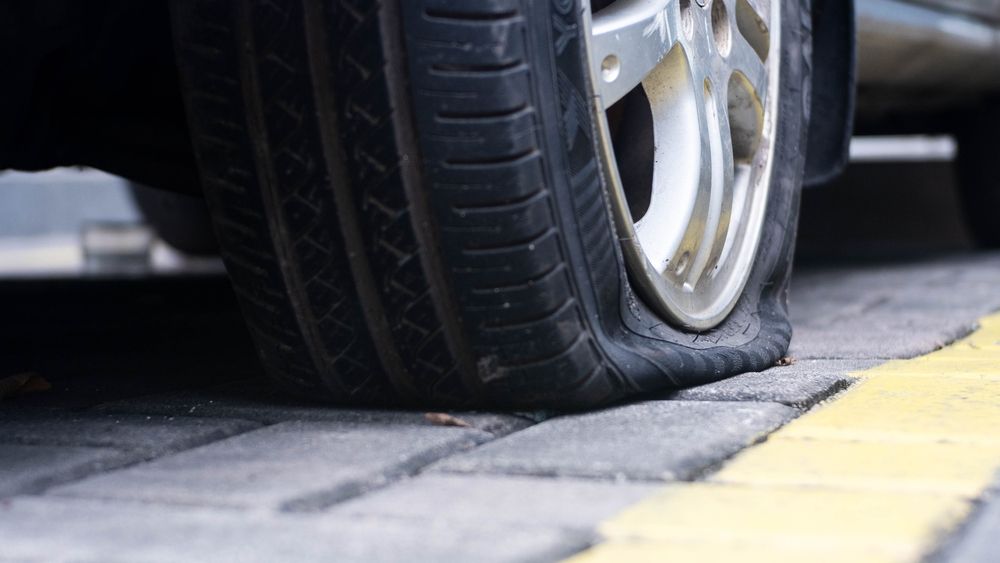


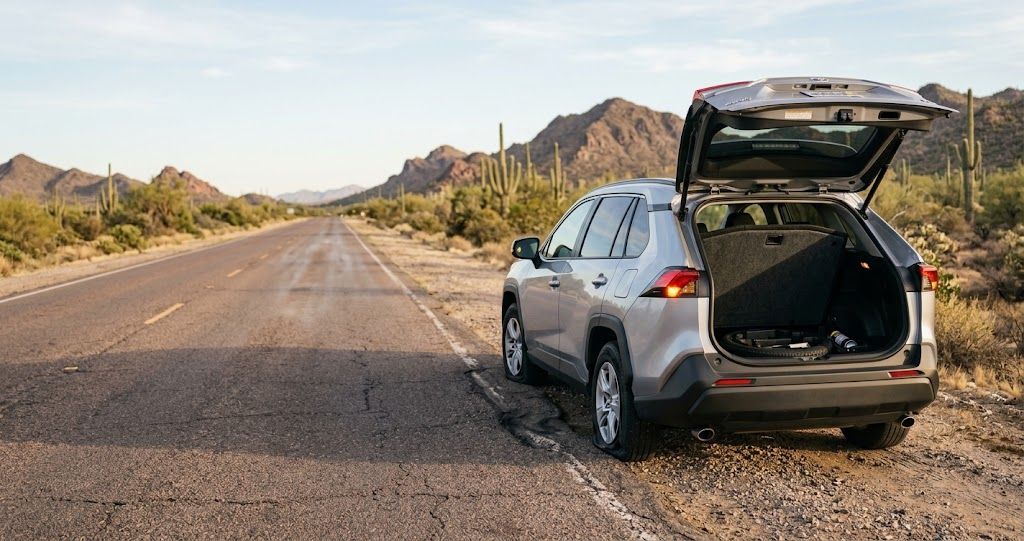
If you have a flat tire and no spare, get off the road, then call a mobile tire service. That is the whole answer. Everything below is about doing it without wrecking the tire, the wheel, or your afternoon — and about the Phoenix-specific parts that generic advice leaves out, like the fact that asphalt out here runs hot enough to make waiting beside your car the most dangerous part of the whole event.
Key Takeaways
- Roughly 30% of new cars ship without a spare — up from about 5% in 2006, according to AAA. If you have not checked your trunk, assume you do not have one.
- Do not drive on it. A tire run flat for even a mile is usually scrap, and a repairable $30 puncture becomes a new tire.
- Think twice before using the sealant can. On foam-lined "acoustic" tires — common on Teslas, EVs and most luxury cars — sealant can soak into the foam and make the tire unrepairable.
- Only tread punctures under 1/4 inch are repairable, and only with the tire off the wheel. Sidewall and shoulder damage is never repairable.
- In Phoenix, heat is the real hazard. Between May and September, being stranded beside a running-hot vehicle is a bigger risk than the flat itself.
- Mobile tire service ends the event where you are — no tow, no second trip, no rental car day. That is the difference between a flat and a lost afternoon.
What To Do First: The Roadside Checklist
The first ninety seconds decide whether this costs you a repair or a new tire. Get the vehicle out of traffic, get yourself out of the sun, and leave the tire alone until someone can take it off the wheel properly.
- Ease off the accelerator — do not brake hard. Sudden braking on a deflated tire shifts weight forward and can pull the car sideways. Let the vehicle slow itself, then steer to the shoulder.
- Get fully off the travel lanes. On I-10, I-17, US-60 or the 101/202/303, keep going to an exit or a wide right shoulder rather than stopping in a gore point or a left-hand shoulder. A ruined wheel is cheaper than being struck.
- Hazards on, wheels turned away from traffic. If you have a reflective triangle, set it well back up the road, not two feet off your bumper.
- Get clear of the car and out of direct sun. Never stand between your vehicle and oncoming traffic. In summer, get behind the barrier or well off the shoulder — and if the temperature is over 100°F, that is now the priority, not the tire.
- Look at the tire, but do not touch it. Photograph the damage and where it sits — center tread, shoulder, or sidewall. That one photo tells a technician on the phone whether this is a repair or a replacement.
- Call for tire service. A mobile tire service brings the tire, the machine and the balancer to you. That is the only option on this list that finishes the job at your location.
If you are in immediate danger — stuck in a live lane, in a crash, or suffering in the heat — call 911 first. For freeway incidents and closures across the Valley, ADOT's AZ511 is the authoritative source. LugWrench Heroes is open Monday through Friday 8:00 AM–5:00 PM and Saturday 8:00 AM–3:00 PM; outside those hours, a roadside assistance program or tow is your route to safety, and we can handle the tire itself the next business day.
One more thing that matters more than people expect: do not limp it home. "It's only a couple of miles" is the single most expensive sentence in this entire situation. Driving on a deflated tire destroys the inner liner and the sidewall from the inside, where you cannot see it, and it frequently damages the wheel as well. A tire that arrives at us with a nail in the tread is often a repair. The same tire driven two miles is almost always a replacement.
Why Your Car Probably Doesn't Have a Spare Anymore
About 30% of new vehicles come with no spare tire at all — a figure that has climbed from roughly 5% in 2006, and it means AAA now estimates more than 30 million cars on U.S. roads carry no spare. A spare, jack and tools add roughly 30 pounds, and that weight works against federal fuel-economy targets. So automakers deleted it.
What replaced it is usually a sealant-and-compressor kit in a foam tray under the trunk floor. Some cars get run-flat tires instead. Electric vehicles almost never carry a spare, because the battery pack occupies the space where the well used to be and every pound costs range.
The practical consequence is that most drivers do not discover any of this until they are standing on a shoulder at 4:30 on a Tuesday. Check your trunk this week. If there is a can and a small compressor where a wheel should be, you now know what your plan is — and it is worth reading the next section before you ever need it.
Should You Use the Sealant Kit? What It Actually Costs You
A sealant kit will sometimes get you moving, but it narrows your options and can turn a repairable tire into a scrap tire. It is worth understanding what you are trading before you press the button on the side of the road.
Start with what it cannot do. Sealant only addresses small punctures in the tread. It does nothing for a blowout, nothing for sidewall damage, and nothing for a tire that has already been driven on flat — which covers a large share of real roadside flats. AAA's testing found these kits have limited functionality, carry a shelf life of only four to eight years, and can cost up to ten times what a proper tire repair costs. The can in your trunk may well have expired without you knowing.
Then there is what it does to the tire afterward. Sealant coats the inside of the tire and the tire pressure monitoring sensor mounted to the wheel. Sealant manufacturers state their products are sensor-safe provided a technician cleans the residue off during repair, and that is generally true — but several automakers explicitly warn against sealant use in the owner's manual and specify replacing the TPMS sensor and valve stem afterward. Either way it adds labor, and TPMS sensor replacement is not a trivial line item.
The part almost nobody mentions: many modern tires — especially on Teslas, other EVs, and luxury vehicles — are "acoustic" tires with a layer of sound-deadening foam bonded to the inner liner. Sealant soaks into that foam and cannot be cleaned out. On a foam-lined tire, one can of sealant can convert a repairable puncture into a tire that must be replaced. If you drive something with a quiet, foam-lined tire, the sealant can in your trunk is not a fix. It is a decision to buy a tire.
None of this makes sealant useless. If you are somewhere genuinely remote, alone, and the alternative is waiting hours, use it and accept the tire may be a write-off. In the Phoenix metro, where a mobile tire service can reach you at a home, office or parking garage, the math almost never favors the can. It is also worth knowing how long you can actually drive on a plugged tire before you rely on any temporary fix.
Which Flat Tires Can Actually Be Repaired
A tire is repairable only if the damage is in the tread and the puncture is no larger than 1/4 inch (6mm). Everything else is a replacement. These are not shop preferences — they are the published standards of the U.S. Tire Manufacturers Association, and any shop that ignores them is handing you a tire that can fail at speed.
The standard also rules out the repair most people picture. A plug pushed in from the outside, without taking the tire off the wheel, is not an acceptable repair. USTMA is explicit: the tire must be removed from the wheel and inspected inside for hidden damage, and the repair must combine a rubber stem filling the puncture channel with a patch sealing the inner liner. A plug alone leaves a void that heat and flexing work open over time.
| Damage | Repairable? | Why |
|---|---|---|
| Nail or screw in the center tread, under 1/4" | Yes | Within the crown area, backed by the steel belts. Proper plug-patch from inside restores the tire. |
| Puncture larger than 1/4" (6mm) | No | Belt and ply damage is too extensive for a repair unit to stabilize. |
| Anything in the sidewall | No | The sidewall flexes on every rotation. No repair holds under that load. |
| Shoulder damage (outside the crown) | No | Outside the repairable area — roughly 1 to 1.5 inches in from each shoulder. |
| Sidewall bubble or bulge | No | Internal cords are already broken, usually from a curb or pothole. The tire is scrap. |
| Tire driven on while flat | Usually no | The inner liner and sidewall are destroyed from the inside even when the outside looks fine. |
| Tread worn below 2/32" | No | Legally worn out. A repair cannot be warranted on a tire at the wear bars. |
| Overlapping an existing repair | No | Repairs cannot overlap. A tire carrying an improper prior repair must be scrapped. |
Run-flats are their own category, and manufacturers set individual repair policies for them — if you have run-flats, read whether a run-flat can be patched or plugged before you assume either way. Speed-rated tires also have manufacturer-specific rules about whether the speed rating survives a repair.
Your Three Options in Phoenix, Compared
With no spare, you have three realistic paths, and they differ less in price than in where you end up and how many hours the day costs you.
| Sealant kit | Tow to a shop | Mobile tire service | |
|---|---|---|---|
| Fixes a blowout or sidewall | No | Yes | Yes |
| Works if you already drove on it | No | Yes | Yes |
| You have to leave your location | Yes — drive to a shop | Yes — ride along or arrange pickup | No |
| Effect on the tire | May make repair impossible on foam-lined tires | None | None |
| New tire available on the spot | No | Only if the shop stocks your size | Yes — brought to you |
| Balanced and torqued to spec | No | Yes | Yes — balancer in the van |
| Typical outcome | Temporary, then a second trip anyway | Tow fee plus shop time, half a day gone | Done where you parked |
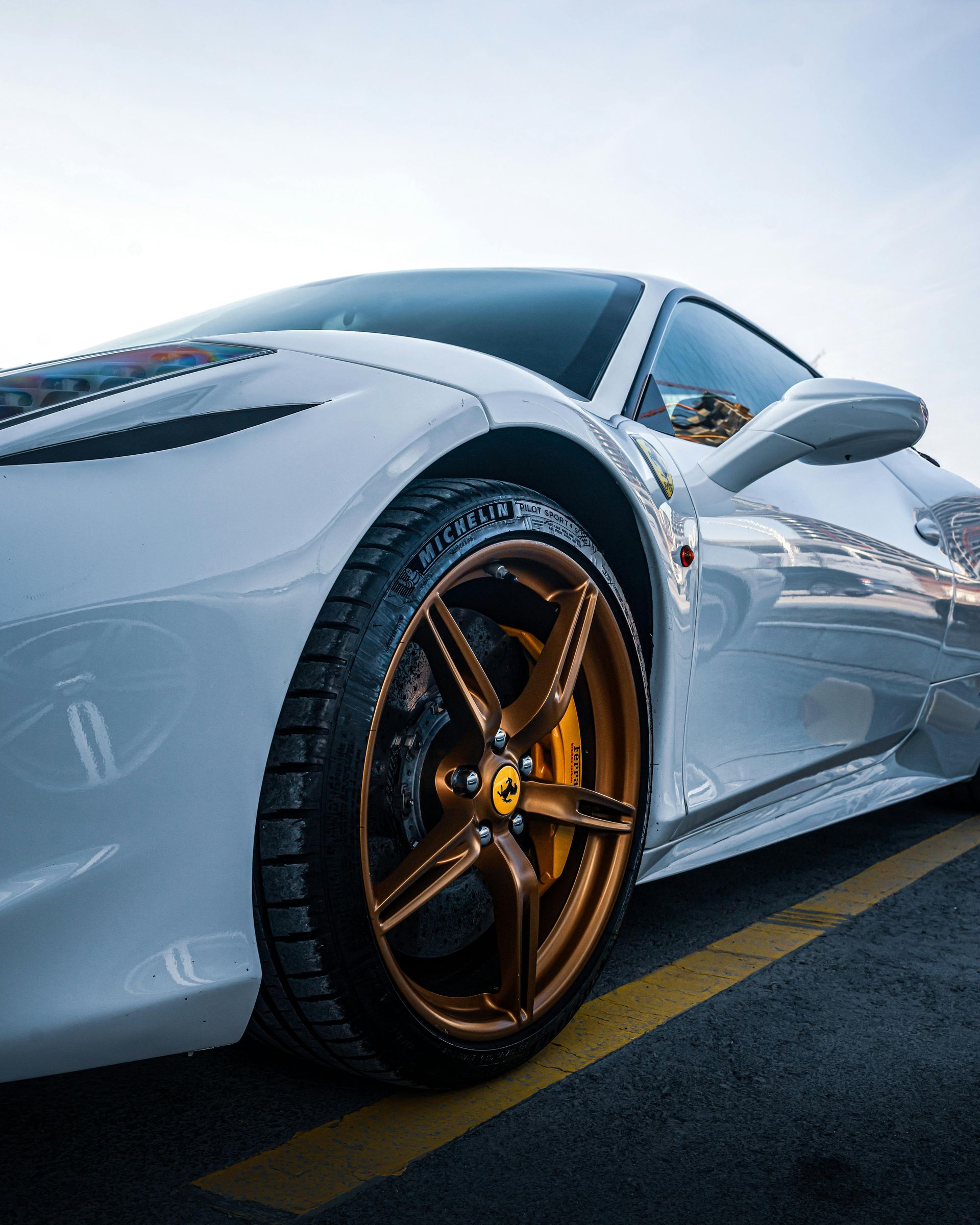
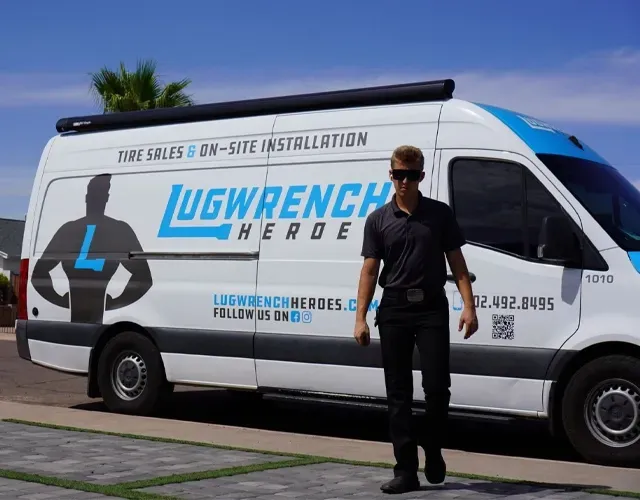
The reason the third column exists is that a tow only moves the problem. You still need a shop with your size in stock, you still need to get back to the shop, and you have paid for the tow on top of the tire. Mobile tire repair collapses that into one visit at your driveway, office lot, or job site. We work on everything from daily drivers to exotics and custom wheels, using touchless tire machines that never contact the wheel face — which matters more than it sounds if your wheels are polished, painted, or center-lock.
Phoenix-Specific: Heat, Monsoon, and Where Flats Actually Happen
Valley flats are not distributed like flats anywhere else, and the differences change what you should do. Between May and September, asphalt surface temperatures across the metro can exceed 150°F — far above the air temperature — and that is the number that matters when you are standing on a shoulder in Ahwatukee or out past Gold Canyon waiting for help.
Heat is the actual danger. A vehicle with the engine off stops cooling within minutes, and the National Weather Service issues Excessive Heat Warnings across Maricopa County precisely because these conditions turn ordinary delays into medical events. If you are stranded in summer, get into shade, drink whatever water you have, and tell whoever you call that you are exposed to the heat. That changes how the call gets prioritized.
Heat also causes the flats. Hot pavement accelerates blowouts and drives the internal pressure swings that turn a slow leak into a sudden failure, while year-round UV exposure produces dry rot on tires with plenty of tread left. Snowbird vehicles that sit from May to October are especially vulnerable — the tread looks new and the rubber is six years old.
Monsoon season, from June 15 to September 30, adds its own pattern. Storms push construction debris, roofing nails and blown-out truck retread onto the freeways, and the heaviest concentrations show up along the I-10 and I-17 corridors and the Loop 101, 202 and 303 construction zones. The first rain after months of dry road is also the slickest, because accumulated oil lifts before it washes away.
Where you are shapes the fix, too. Gated communities and HOAs in Scottsdale and Paradise Valley need gate access arranged before a technician arrives. Apartment complexes in Tempe near ASU and Mill Avenue often have covered parking with height limits. Sky Harbor has its own curb rules for how long a vehicle can sit. None of that stops a mobile service — it just needs to be mentioned on the call, and we serve Phoenix, Scottsdale, Tempe, Mesa, Chandler and the rest of the Valley the same way.
Flat Tire, No Spare? We Come To You.
Call or text and tell us where you are. We bring the tire, the touchless machine and the balancer to your location.
(602) 492-8495 Book Online Shop TiresThe tire store at your door — backed by a 45-day ride guarantee.
Flat Tire and No Spare: Common Questions
What does roadside assistance do if you don't have a spare tire?
Without a spare, most roadside assistance programs can only tow your vehicle to a repair facility — there is nothing for them to install. Some will attempt a sealant fix, which carries the same limits as the can in your trunk. A mobile tire service is the alternative that actually resolves it on site, because it arrives with the replacement tire, mounts it touchlessly, and balances it before you drive away.
What can I do if I don't have a spare tire?
You have three options: use the sealant and compressor kit if your car came with one and the puncture is a small tread hole, call for a tow to a tire shop, or call a mobile tire service to come to you. In the Phoenix metro the third option is usually fastest and cheapest overall, because it removes the tow fee and the second trip. Whatever you choose, do not drive on the flat — that decision alone often turns a repair into a replacement.
Can I drive 2 miles with a flat tire?
No. Even two miles on a deflated tire will usually destroy it. Without air pressure the sidewall folds under the weight of the car and the inner liner shreds against the wheel, and that damage is invisible from the outside. You also risk bending or gouging the wheel, which is frequently more expensive than the tire. The only exception is a genuine run-flat tire, which is engineered to travel a limited distance at reduced speed.
What happens if I get a flat tire on the freeway?
Ease off the accelerator without braking hard, steer to the right shoulder or the next exit, and get the vehicle completely clear of the travel lanes. Put your hazards on, then get yourself away from the roadway — never stand between your car and traffic. On Phoenix freeways in summer, get out of direct sun as soon as you are clear, because heat exposure becomes the bigger risk within minutes. Check AZ511 for closures, and call for tire service once you are safe.
What happens if you get a flat tire without a spare?
Nothing changes about the flat itself — you simply lose the ability to swap the wheel yourself, so the vehicle stays where it is until help arrives. That is why the shift matters: roughly 30% of new cars have no spare, so a routine roadside fix has become a service call for most drivers. Knowing before it happens whether your trunk holds a wheel, a sealant kit, or nothing at all is the single most useful thing you can do about it today.
How much does roadside assistance charge for a flat tire?
It depends entirely on your provider and whether you carry a membership or an insurance rider, so we will not quote someone else's pricing. What we can tell you is what drives the total: a tow charges by hookup plus mileage, and with no spare a tow is usually what you get. Mobile tire service replaces both the tow and the shop visit with one call, which is where the savings actually come from. Call or text us at (602) 492-8495 and we will give you a real number for your vehicle and tire size.
Will using Fix-a-Flat ruin my tire or my TPMS sensor?
Sealant manufacturers state their products are sensor-safe as long as a technician cleans the residue off the TPMS sensor during repair, and that generally holds. However, several automakers warn against sealant use in the owner's manual and specify replacing the sensor and valve stem afterward. The bigger risk is the tire itself: on foam-lined acoustic tires, common on Teslas, EVs and luxury vehicles, sealant soaks into the sound-deadening foam and cannot be removed, which can make an otherwise repairable puncture unrepairable.
LugWrench Heroes Mobile Tire Shop
(602) 492-8495 — call or text
4665 S Ash Ave Suite G-7, Tempe, AZ 85282
Mon–Fri 8:00 AM–5:00 PM · Sat 8:00 AM–3:00 PM
Mobile service — we come to you · BBB A+ Accredited Business · 45-Day Ride Guarantee
Last updated August 14, 2026 by Nathan Martin, Founder of LugWrench Heroes Mobile Tire Shop. Repair criteria per the U.S. Tire Manufacturers Association. Spare tire availability data per AAA.